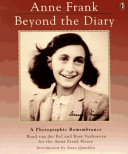
Beyond the Diary: Uncovering Anne Frank's Broader Literary Works
For many across the globe, the name Anne Frank is synonymous with a single, profound document: El diario de Ana Frank, or The Diary of Anne Frank. It’s a book that has touched countless hearts, offering an intimate glimpse into the life of a young girl hiding from Nazi persecution. However, to consider this diary as her sole literary contribution is to overlook the true breadth and depth of Anne Frank's aspirations and accomplishments as a writer. Her work, indeed, was far more extensive, revealing a blossoming literary talent eager to leave its mark on the world.
The Genesis of a Global Phenomenon: Beyond the First Diary
Anne Frank's journey as a writer began on June 12, 1942, her thirteenth birthday. She received a diary, a cherished gift she had longed for, carefully chosen from a bookstore by her parents. Two days later, on June 14, 1942, she penned her first entry, confiding her deepest thoughts and hopes to this new companion. She wrote primarily in Dutch, occasionally weaving in words from German and English, reflecting her multilingual environment.
The diary quickly became her confidante, a role she expressed her earnest hope it would fulfill. Anne's unique approach to her diary transformed it from a mere record of daily events into a series of letters addressed to a fictional friend named Kitty. This imaginative choice was inspired by a series of books Anne devoured, written by the Dutch author Cissy van Marxveldt. These books featured a character named Joop and her circle of friends, one of whom was Kitty Francken, an intelligent, cheerful, and amusing character. Anne's decision to personify her diary allowed her to explore her thoughts and emotions with a depth and freedom that might otherwise have been constrained.
When the Frank family went into hiding on July 6, 1942, her diary was one of the first, most precious items Anne packed. Within the confines of the Secret Annex, the diary became a sanctuary. Her initial diary notebook, however, was not limitless. Her last entry in this particular volume was on December 5, 1942, after five months in hiding, though it still contained blank pages where she would later add more thoughts. As this first diary began to fill, Anne transitioned to writing in notebooks, which were provided by her sister Margot and their protectors. While the notebooks from 1943 have sadly been lost to history, two crucial notebooks from 1944 survived, covering the periods from December 22, 1943, to April 17, 1944, and April 18, 1944, to August 1, 1944. Her final entry, a poignant reflection on her inner turmoil, was written just three days before the family's arrest.
Anne Frank's Aspirations: A Writer in the Making
What many might not realize is that Anne Frank wasn't just keeping a diary for personal solace; she harbored serious literary ambitions. She dreamt of becoming a famous writer or journalist, and her time in the Secret Annex, despite its terror, also served as her self-imposed literary apprenticeship. This aspiration became particularly evident in 1944 when she heard a radio broadcast from Gerrit Bolkestein, a member of the Dutch government-in-exile, urging people to preserve diaries and documents detailing their wartime experiences for future publication. This broadcast galvanized Anne.
Inspired, she began to rework her original diary entries, intending to publish them as a novel after the war. This monumental undertaking involved editing, rewriting, expanding, and even omitting certain passages, creating what scholars refer to as her "B version" or "revision" of the diary, distinct from her initial "A version." This sophisticated editorial process demonstrates not only her dedication but also her innate understanding of narrative structure and audience. She transformed personal musings into a more polished, coherent narrative, already showing the acumen of a professional author. This careful revision underscores that the Libro Ana Frank we know today is not merely an unedited record but a work shaped by the author's own hand with a clear vision for its future.
Unearthing Anne's Diverse Literary Portfolio: More Than Just the Diary
Beyond her iconic diary, Anne Frank's creative spirit manifested in several other compelling writing projects. These forgotten works provide a richer, more nuanced portrait of her literary capabilities and her profound engagement with the world around her, even from within the confines of her hiding place.
A Collection of Short Stories: Glimpses of Life and Imagination
Anne's talent for storytelling extended far beyond her diary entries. She meticulously crafted no fewer than 34 short stories. These narratives varied widely in theme and tone. Some offered witty observations about her life at school, showcasing her keen eye for human nature and her youthful perspective. Others delved into the daily realities and humorous incidents within the Secret Annex, revealing her ability to find light even in the darkest circumstances. Perhaps most fascinating are her purely fictional tales, stories born entirely from her imagination, demonstrating her escapist spirit and burgeoning creativity. These short stories offer invaluable insights into Anne's inner world, her sharp wit, and her aspirations as a creative writer, proving her prowess in various literary forms.
The 'Book of Beautiful Phrases': A Reader's Reflection
Another fascinating project Anne undertook was her "Book of Beautiful Phrases." This wasn't a collection of her own original texts but rather a testament to her intellectual curiosity and her profound engagement with literature. Inspired by her father, Otto Frank, Anne meticulously copied quotes, poems, and insightful passages from the various books she read during her time in hiding. This "anthology" reflects her search for wisdom, comfort, and understanding in challenging times. It provides a unique window into her mind, revealing the ideas and philosophies that resonated with her and helped her process the realities of her situation. It positions Anne not just as a writer, but as a thoughtful and reflective reader, actively constructing her worldview through the words of others.
"The Life of Cady": An Unfinished Novel's Promise
Anne's literary ambition also extended to longer-form narrative. She embarked on a novel project titled "The Life of Cady." Although she only completed a few chapters before interrupting it, this endeavor is incredibly significant. It shows her determination to craft an extended fictional work, moving beyond personal accounts and short vignettes. "The Life of Cady" hints at a promising future as a novelist, demonstrating her commitment to character development and plot construction, skills typically associated with more mature writers.
"The Secret Annex": Her Vision for a Published Account
Perhaps most poignantly, Anne had a specific title in mind for the book she intended to write about her time in hiding: "The Secret Annex." This title underscores her understanding of the historical significance of her experiences and her desire to present them to the world in a structured, coherent manner. Her diligent revisions of her diary were all part of this overarching project. Tragically, she did not live to see her work published, but her father, Otto Frank, meticulously compiled and edited her diary and writings, fulfilling her deepest wish to tell her story. The posthumous publication of El diario de Ana Frank, therefore, is a direct fulfillment of Anne's own authorial intent.
The Enduring Legacy of "Libro Ana Frank"
To truly appreciate Anne Frank's enduring impact, it is essential to understand that "Libro Ana Frank" encompasses not just the celebrated diary but all these diverse writings. When we consider her short stories, her book of phrases, her unfinished novel, and her revised diary entries, we gain a much richer understanding of her as a burgeoning literary figure. Her literary works, taken together, demonstrate a prodigious talent, a keen intellect, and an unwavering spirit.
Knowing about these broader works deepens the experience of reading her diary. It transforms the image of a child diarist into that of a conscious artist, a young woman who was actively honing her craft, experimenting with different forms, and preparing to make a significant contribution to literature. Her writings offer not just a historical account of persecution, but a testament to the power of the human spirit and the enduring importance of creative expression. For those inspired by her story, exploring these additional facets of her writing is highly recommended. Many modern editions and academic collections now include these supplementary texts, allowing readers to engage more fully with the entirety of Anne Frank's literary genius.
Conclusion
Anne Frank was much more than a girl who kept a diary; she was a dedicated writer, a thoughtful observer, and an ambitious storyteller with a diverse literary portfolio. From the intimate confessions to Kitty to her imaginative short stories, her reflective book of phrases, and her nascent novel, her collected works—the true Libro Ana Frank—reveal a remarkable talent cut tragically short. Her enduring voice continues to resonate, not just through the familiar pages of her diary, but through the entirety of her written legacy, urging us to remember, to understand, and to appreciate the profound power of words.